
September is not only about returning to work: it is also an opportunity to look at how we actually work and understand whether our workspace can support the different moments of the day.
Going back to work comes with a certain degree of complexity.
Within the same day, we move from deep focus to calls, from quick notes to document reviews, from keyboard to paper, from a short break to a new task. The desk follows these changes of pace, continuously adapting along with us.
Rethinking the workspace, therefore, does not necessarily mean searching for the perfect new setup or adding more objects. It can mean something much more practical: understanding where the daily workflow is interrupted, which gestures are unnecessarily repeated, and which solutions can make the transition from one activity to another feel more natural.
Ultimately, the best workspace is the one that can adapt.
One desk, many ways of working

Think about everything that happens on the same surface within just a few hours.
In the morning, we may need a clear, essential space dedicated to concentration. Soon after, there is a video call, a phone, a notebook for taking notes. Then come documents to review, ideas to write down, materials to move temporarily, and personal items that enter and leave the scene.
Contemporary work rarely follows a linear sequence. And the desk itself is no longer a static space.
Designing a good workspace therefore means thinking less about the final image and more about how the space is actually used. Each element should work together with the others, create room when needed and define functions without making the setup feel rigid.
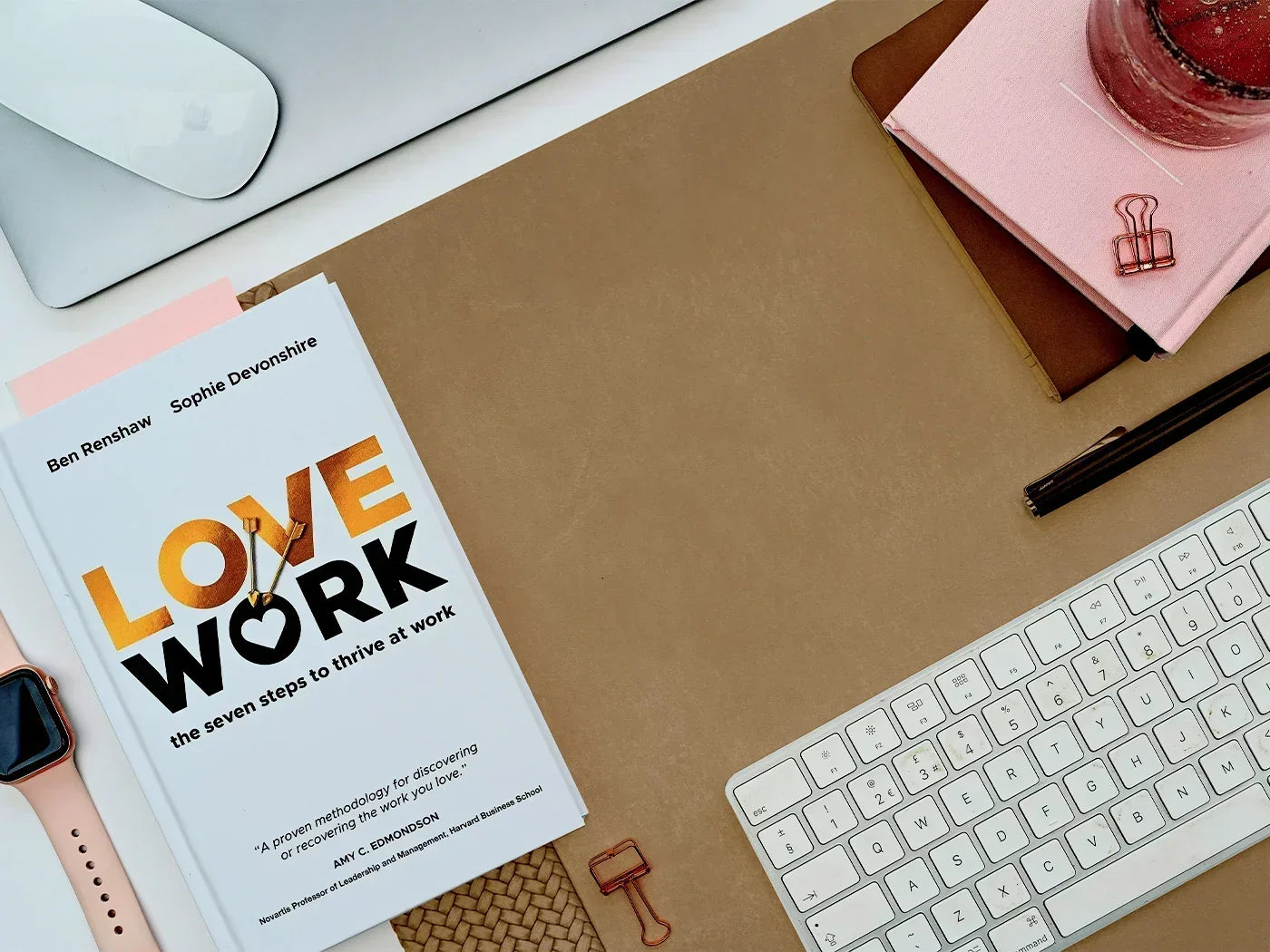
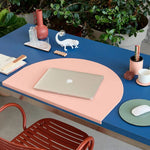
A desk pad, for example, is not simply a decorative surface: it can clearly define the working area, creating continuity between the mouse, keyboard, notes and other tools.
An organizer is not simply there to “keep things tidy”, but to make the objects we use most frequently immediately accessible.
Small details, perhaps, but ones that can make the workspace significantly more flexible.
Reducing micro-frictions

Many everyday interruptions are so small that they may seem insignificant.
Looking for a pen, constantly moving the phone, clearing part of the desk to sign a document. Or letting papers pile up because they are not yet ready to be filed, but no longer need immediate attention. And then, every time, finding somewhere to place keys, earphones or other personal belongings.
These are what we might call micro-frictions: small gestures that, when repeated throughout the day, interrupt the natural continuity of work.
A well-designed accessory can make a difference precisely here.
A pen holder removes a repeated search. A tray gives a defined place to objects that would otherwise move around the desk. A document tray creates an intermediate space between what is still “in progress” and what is ready to be filed. A coaster allows a break to become part of the workspace without interfering with everything else.
The aim is not to fill the desk with objects, but to give each one a clear function.
Good design can be at its best when an object becomes so naturally integrated into our routine that we almost stop noticing it.
Designing for movement, rather than aesthetics alone

A beautiful workspace should not work only when everything is perfectly arranged. It should work while it is being used.
Throughout a normal day, objects move, documents temporarily accumulate, the computer gives way to a notebook, a call changes the arrangement of the tools around us, and a break introduces new elements.
This is where materials, shapes and proportions begin to show their true value.
Coordinated accessories can create visual continuity without imposing rigidity. Surfaces that are pleasant to the touch make repeated gestures more comfortable. Materials designed to last can move through time and daily use without losing character, often gaining more of it along the way.
Real leather, in particular, brings a tactile dimension to the workspace that evolves with use, becoming a surface designed to be touched, moved and experienced every day.
This is perhaps one of the most interesting qualities of the objects that accompany our working life: rather than simply decorating a space, they become part of its ongoing transformations.
The real September reset

Rethinking the desk when returning to work does not necessarily mean starting again from scratch. It can simply mean observing our routine and identifying where it tends to slow us down.
Which objects are we constantly looking for?
What always ends up in the wrong place?
Which tools do we usually use together?
Which areas of the desk change function several times throughout the day?
Starting with these questions helps us create a personal and functional workspace, not because it is perfectly tidy, but because it reflects the way we actually work.
This might be the real September reset: less focus on the ideal desk, and more attention to real, everyday gestures.
Explore the Eglooh Shop to discover desk pads, organizers and accessories designed to support the different stages of the working day and make transitions between activities feel more natural.
And the workspace will continue to evolve over the coming months.
More Eglooh designs are arriving in October, bringing new solutions to integrate into everyday working life.